Hearts for beginners: the rules and your first strategy
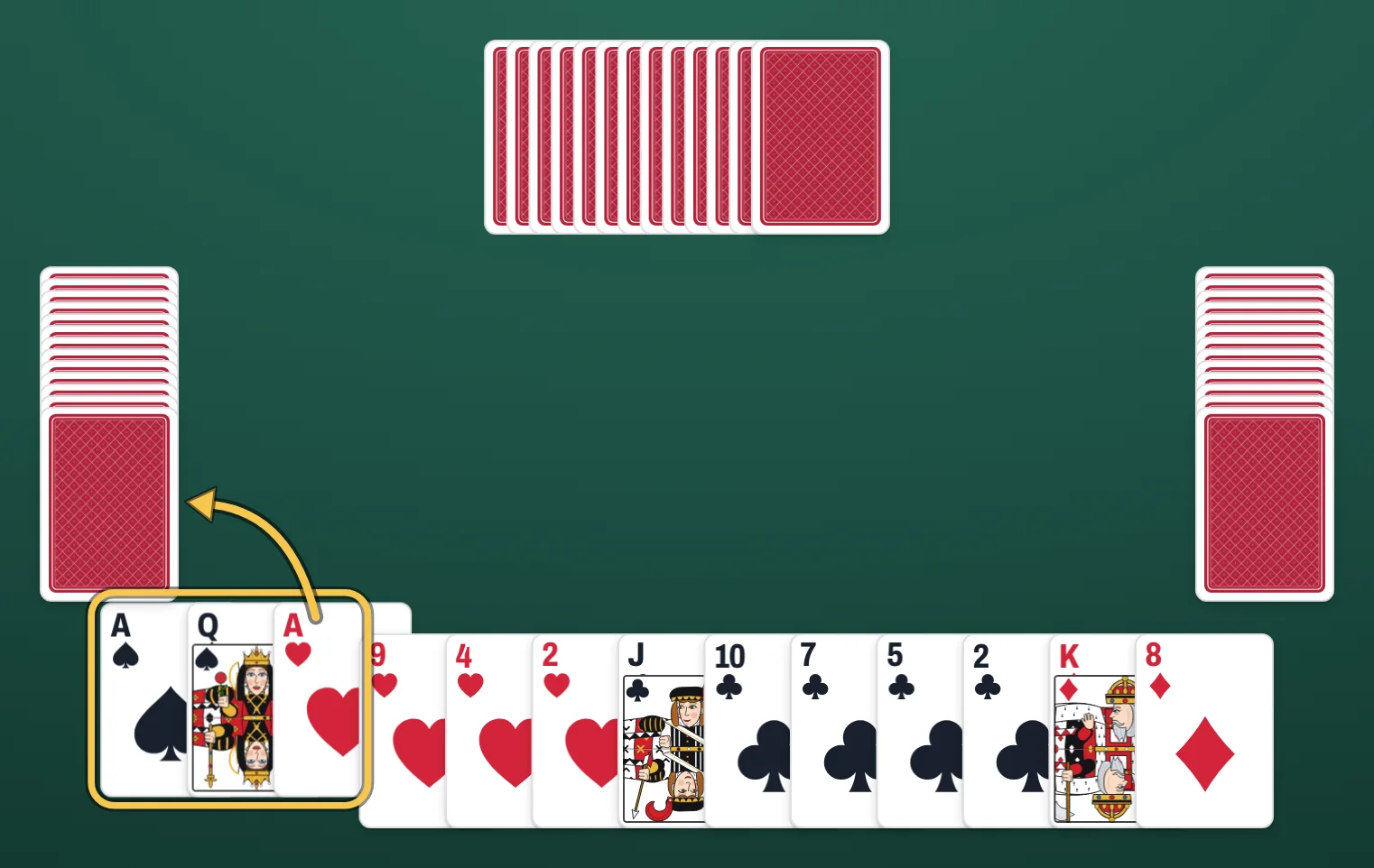
Hearts is a card game for four in which points are bad: you want to take as few as you can. It is easy to learn and has more depth than it first seems. This guide covers the rules as they are played on our Hearts page, then the first strategies worth learning.
The rules in two minutes
- The deal. Each of the four players gets 13 cards. The Ace is high, the 2 low, and there is no trump suit.
- The pass. Before play, everyone passes three cards: to the left in the first hand, to the right in the second, across in the third, and not at all in the fourth. Then the cycle starts again.
- Tricks. Whoever holds the 2♣ leads it to the first trick. Everyone must follow suit if they can; if not, they may play any card. The highest card of the suit led wins the trick, and the winner leads the next one.
- The first trick. Nobody may play a heart or the Queen of spades on the first trick, unless they hold nothing else.
- Breaking hearts. You can’t lead a heart until a heart or the Queen of spades has been played, unless you have only hearts left. The Queen of spades can be led at any time.
- Points. Each heart you take counts 1 point and the Queen of spades 13. If one player takes all 13 hearts and the Queen, they “shoot the moon”: they score 0 and everyone else scores 26.
- The end. The game ends when someone reaches 100 points (or 50 in the short game). The lowest score wins.
Passing three cards
The pass is your first decision, and a good one can win the hand before it starts.
- Pass the dangerous spades. The Queen, King and Ace of spades can make you take the Queen. Pass them unless you hold several small spades to protect them.
- Pass high hearts and high cards in general. High cards win tricks, and tricks carry points.
- Try to empty a suit. If you hold just two or three diamonds, passing them leaves you void, and then you can throw hearts or the Queen of spades whenever diamonds are led.
- Keep your low cards. The 2s, 3s and 4s are your safe cards: they let you lose tricks on purpose.
Playing the hand
Use the first trick
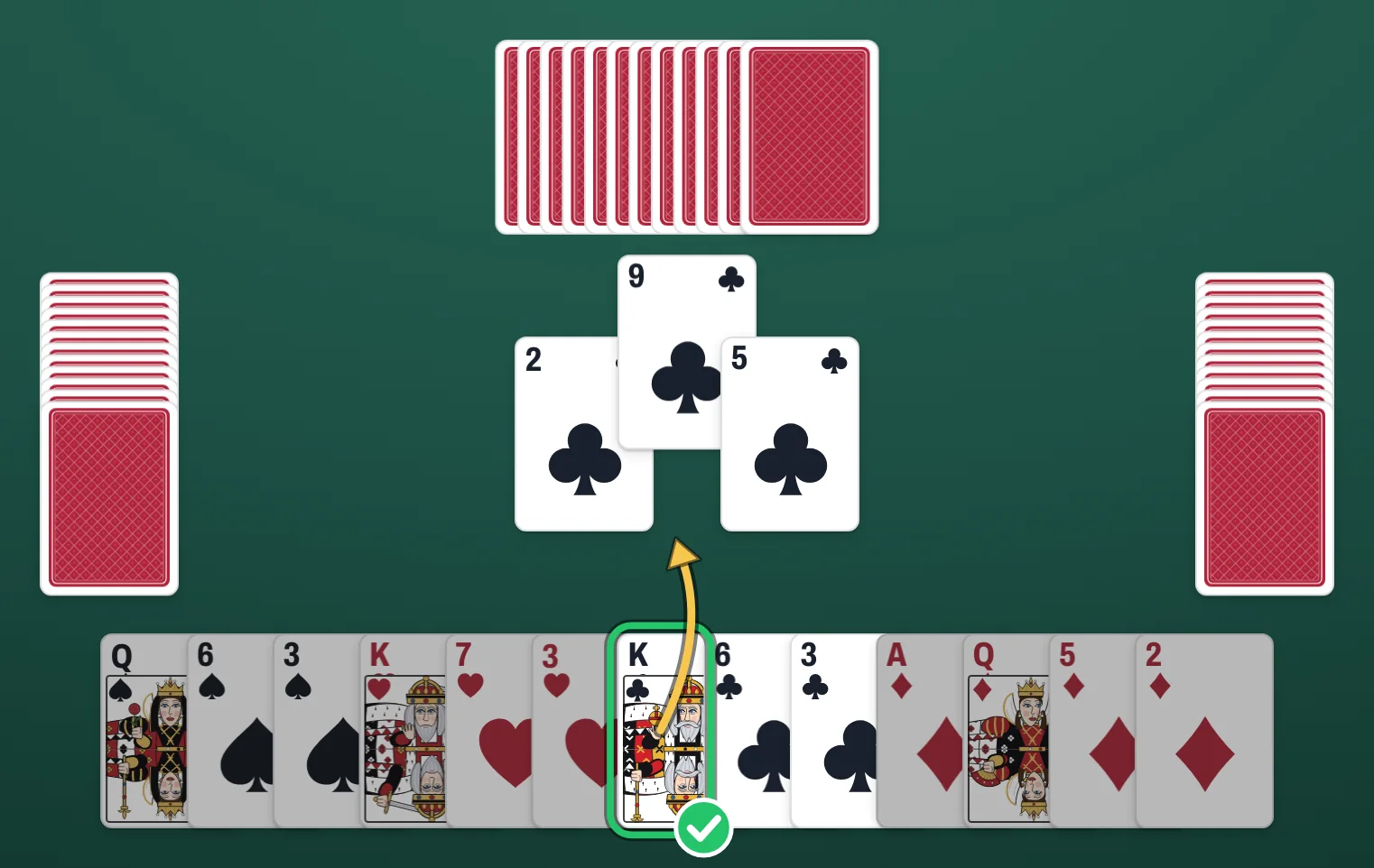
No points may be played on the first trick, so it is the safest trick of the hand. If you have clubs, it is a good moment to get rid of your highest one.
Play high early, low late
In the first rounds of a suit, everyone usually still has cards of it, so the tricks rarely carry points. That is the time to play your high cards. Later in the hand, players run out of suits and start throwing hearts and the Queen, so keep low cards to stay under the winner.
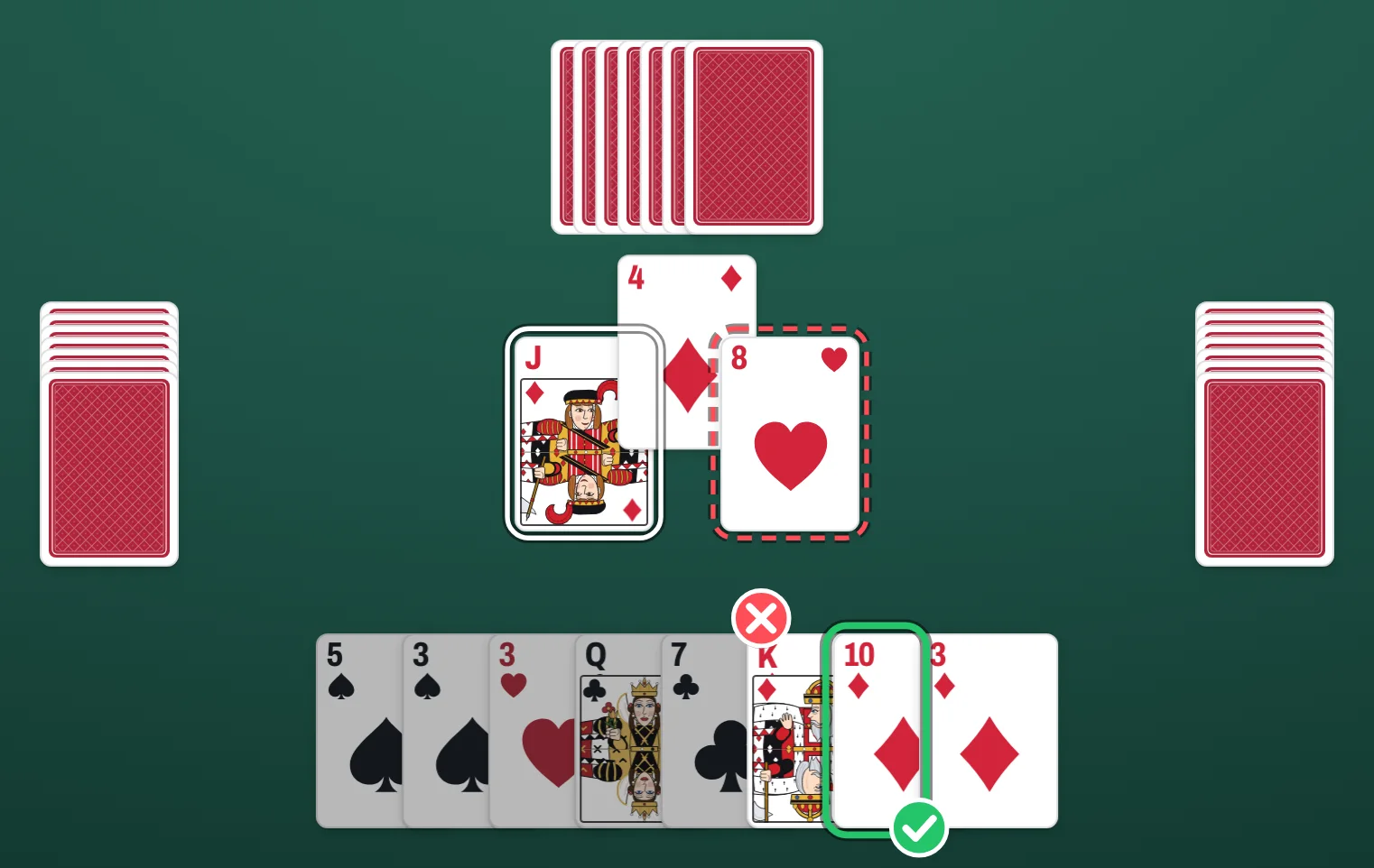
Example: diamonds are led for the first time and you hold the K♦ and the 3♦. Playing the King now probably wins a trick with no points in it. Keep the 3♦ for a later diamond trick, when the others may be throwing hearts on it.
Duck under the winning card
When you must follow suit, play the highest card that still loses to the card that is winning the trick. You keep your low cards for later and get rid of a card that could have won a trick full of points.
Flush out the Queen of spades
If you don’t hold the Queen of spades and you have several low spades, lead them. Whoever holds the Queen may be forced to play it, possibly under another player’s King or Ace. If you do hold the Queen with few spades, avoid leading spades, and wait for a chance to throw it on a trick when you’re out of the suit led.
Watch who is out of a suit
When a player can’t follow suit, remember it: on the next trick of that suit, they’ll be free to throw points on it. Count the cards played in each suit, especially spades, so you know when the Queen is still out.
Shooting the moon
Taking every heart and the Queen of spades scores 0 for you and 26 for each of the others. It needs a strong hand, usually with long, high hearts and control of the other suits, and it is risky: if another player takes a single heart, you keep all the points you’ve taken. Try it only when your hand is clearly strong.
More often you’ll need to stop someone else. If one player has taken all the points so far, take one heart yourself, even if it costs you a point. One point is far better than 26.
Common beginner mistakes
- Keeping the Queen of spades with only one or two other spades.
- Passing low cards and keeping high ones.
- Saving high cards until late in the hand, when tricks are full of points.
- Forgetting that hearts can’t be led until they are broken.
- Not noticing a moon shot until it’s too late to stop it.
Practising against the computer
On Card Gamez you play Hearts against three computer players, who follow the same rules as you and see only their own cards. Cards you can’t play are shown darker, so the rules are hard to break. Press Hint to see the cards a careful player would pass, or the card they would play. A game to 50 points, chosen under New, is a quick way to practise.
If you enjoy Hearts, try Spades next: another trick-taking game, where you bid how many tricks you’ll win and play with a partner.